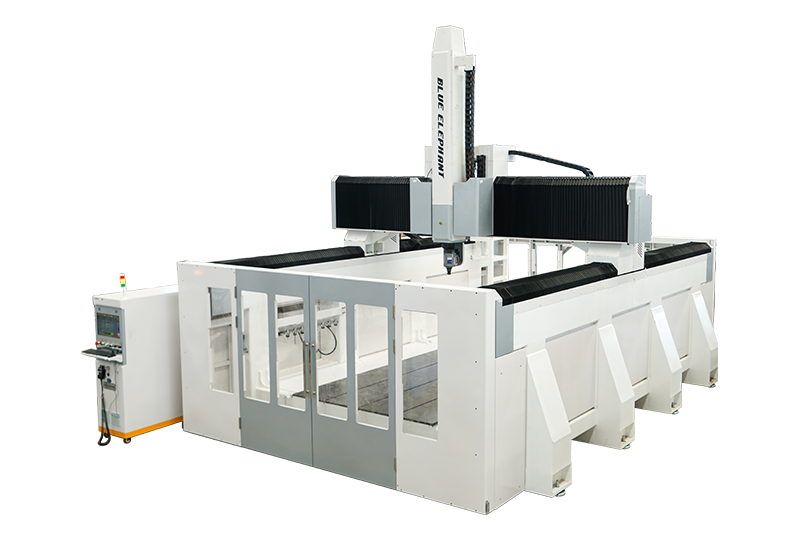
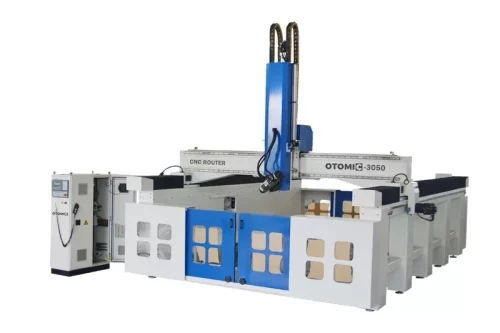
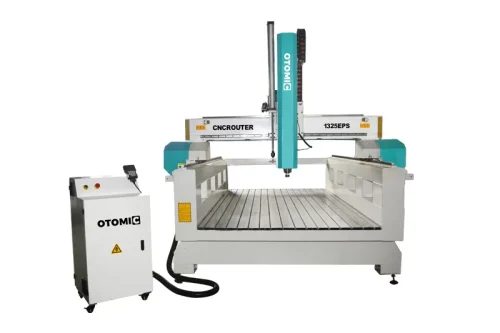
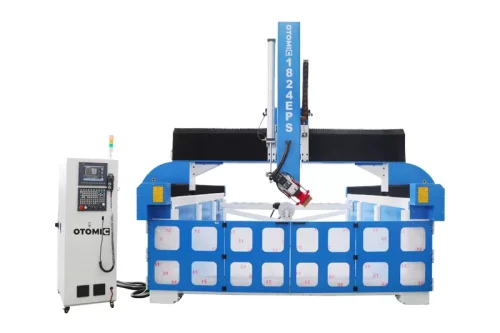
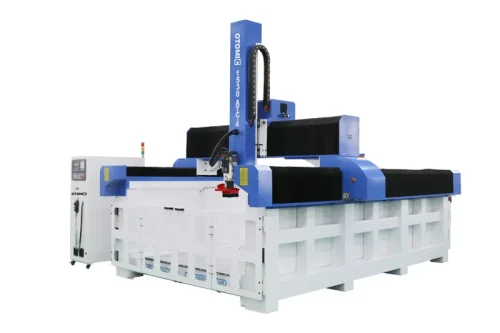
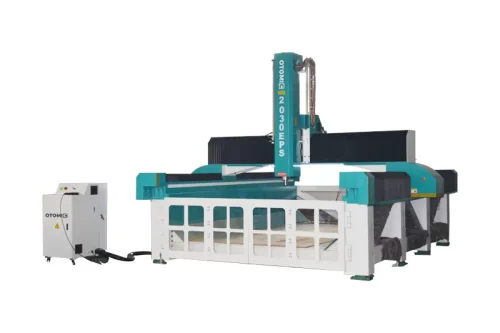
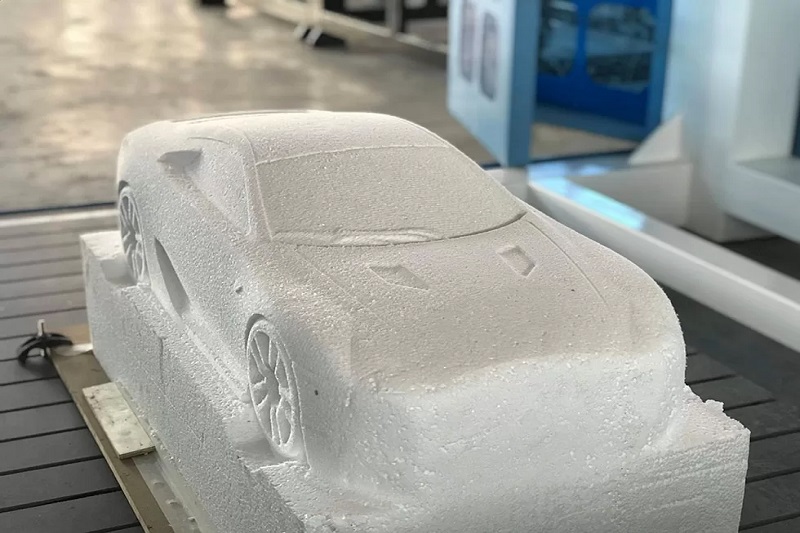
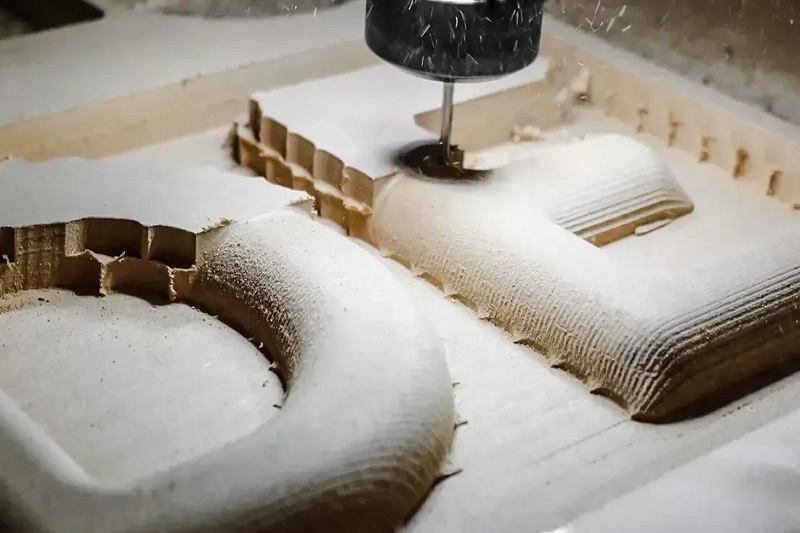
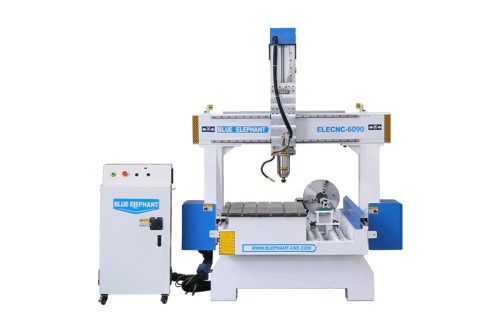
Fourth-axis CNC machines have only three feed axes (X, Y, Z). The Y axis can be manually replaced with a rotation axis. Only three axes can be linked at most. In terms of usage, it can mill planes, reliefs, and cylinders.
A 4-axis CNC machine tool has four feed axes (X, Y, Z, A) and can only perform three-axis simultaneous processing. It can mill and cut flat surfaces, reliefs, cylinders and irregular 3D shapes.
The four-axis linkage automatic machine tool has four feed axes (X, Y, Z, A), which can be processed through four-axis linkage. It can mill planes, reliefs, cylinders, irregular three-dimensional shapes, and process supplementary angle 3D models.
Five-axis CNC machine tools are multi-axis 3D CNC machining centers. Usually five-axis linkage refers to the linear interpolation motion of any five coordinates in X, Y, Z, A, B, and C.
In other words, the five-axis refers to the three motion axes of X, Y, and Z plus any two rotation axes. Compared with the common three-axis (X, Y, Z three degrees of freedom) machining, five-axis machining means that when processing parts with complex geometric shapes, the machining tool needs to be able to position and connect in five degrees of freedom. Five-axis machining has the advantage of high machining accuracy and is specially used to process complex curved surface parts.